In February, 16 states filed a lawsuit against President Donald Trump‘s declaration of a national emergency to fund a wall along the U.S.-Mexico border. The lawsuit, led by California and joined by Colorado, Connecticut, Delaware, Hawaii, Illinois, Maine, Maryland, Michigan, Minnesota, Nevada, New Jersey, New Mexico, New York, Oregon and Virginia, argues that the emergency declaration is unconstitutional and that the president does not have the authority to redirect federal funds appropriated by Congress for other purposes to build the wall. The lawsuit is the latest challenge to the president’s immigration policies and comes as Trump is threatening to declare another national emergency or shut down the government if Congress does not provide the $5.7 billion he has requested for the wall.
16 states sue to block President Donald Trump’s national emergency declaration. Texas is the only state along the border that did not join in the suit, while Arizona is not one of them. After reaching an agreement on a spending bill to avoid a government shutdown, Trump announced $6.6 billion in military and drug-related funding. On Friday, Arizona Gov. Doug Ducey backed up his tweet with a post. Senator Martha McSally (R-Ariz.) addressed concerns about military funding in her home state. She supports President Trump’s goal of increasing border security funding, according to her statement. The Department of Justice has yet to comment publicly on the lawsuits.
Can The President Declare A State Of Emergency?
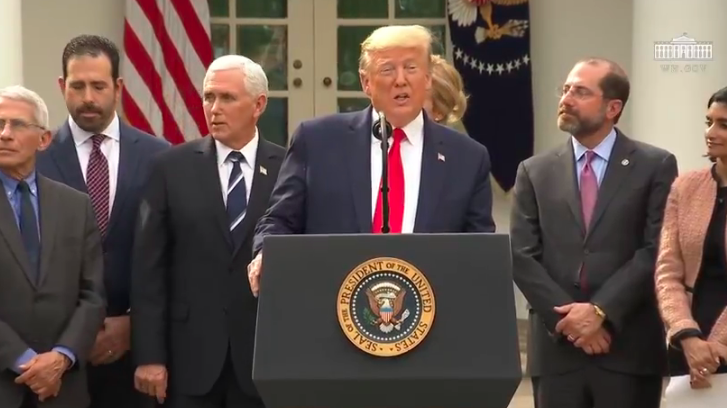
The President has the authority to declare a state of emergency at any time, particularly if federal assistance is required.
In 1976, President Jimmy Carter declared a national emergency under the National Emergencies Act of 1976. President Gerald Ford signed the Emergency Powers Act into law on September 14, 1976, to strengthen the president’s authority during an emergency. When an emergency occurs, the government declares a national emergency. In the event that a presidential emergency necessitates the use of military force, Congress has the authority to pass a joint resolution. If a resolution is passed, the president must sign it or Congress must pass it with a simple majority in both chambers and then veto it. A president has the authority to declare an emergency under current law, but he or she must also demonstrate that the authority is justified.
Subsection (1) allows the President to impose such measures if he believes they are necessary to maintain financial stability or credit or to prevent such threats. (1) A person who violates or fails to comply with any such measure imposed under sub-section (1) shall be sentenced to two years in prison with a fine or with both. According to Article 352 of the Constitution, the President may declare a national emergency when he is certain that the financial stability or credit of India or any part of its territory is jeopardized. When a national emergency is declared, the government has more authority because it has more power than the normal legislature. When the government can take emergency measures without the approval of parliament during a war or external aggression, it is most commonly used for national emergencies. In India, it has been necessary to declare a national emergency in the past in response to financial crises. The most recent was in 2007, when the government used emergency powers to deal with the global financial crisis. The government has the authority to suspend civil liberties, censor, and ban certain types of media during an emergency. If you break the law during a national emergency, you could face up to two years in prison or a $2,000 fine.
Who Has The Power To Declare A State Of Emergency?
During his presidency, Roosevelt asserted the authority to declare emergencies without limitations on their scope or duration, without citing relevant statutes, and without parliamentary review. Presidents have only the authority to declare national emergencies on the basis of external aggression or war since the 44th amendment of the United States Constitution was passed in 1978. Will President Trump declare a national emergency? The president has the authority to declare a state of emergency if he believes that an imminent threat to India’s financial stability or credit status exists. When a state of emergency is declared in a country, the president must consult with the Prime Minister. Should President Obama declare a state of emergency to deal with the threat of terrorism and/or natural disaster? Despite being the commander-in-chief of the armed forces, the president has no authority to declare a war and fund it.