The Supreme Court of the United Kingdom is the highest court in the British legal system and the final court of appeal for cases from England, Wales, Scotland and Northern Ireland. With its long and distinguished history, the Supreme Court is home to the most experienced and respected judges in the country. So, how many judges make up the Supreme Court of the United Kingdom? The answer is 12. These 12 justices are responsible for upholding the law and protecting the rights of citizens in the UK. In addition to their roles as judges, they also act as a court of final appeal in appeals from other courts within the UK. The justices are appointed by the Queen on the advice of the Prime Minister and approved by Parliament. This ensures that the justices are of the highest calibre and have the necessary skills to interpret and apply the law in a fair and impartial way.
The Supreme Court of the United Kingdom ruled in a case brought by the United Kingdom government that it acted illegally when it prorogued Parliament. A surprise visit by the Prime Minister to an American Supreme Court hearing could surprise audiences accustomed to increasingly partisan rulings. Despite the fact that the British system is not perfect, it is far better designed to depoliticize the judiciary. The president of the Supreme Court appoints the selection commission whenever there is an opening on the court, which is convened when a vacancy occurs. Judicial selection boards or commissions exist in England and Wales, Scotland, and Northern Ireland. Merit selection commissions are used in a number of states in the United States to select judges. The Missouri Plan is a well-known reform standard among many in the reform community.
Merit selection commissions may also be subject to ‘capture,’ whether by special interests or political branches. Commissions have no guarantee that an entrenched, powerful group will be unable to gain control over the judicial selection process. Commissions have been successful in reducing judicial power in many cases. commissions are not immune to capture, and this is an alternative to it at the federal level. We want Vox to be free. If you want to send new gifts to our readers, we need to receive 3,000 by December 31. The judicial selection process is not an ideal solution to avoid political influence in judicial selection. However, there are better and worse ways to do so. The current federal government’s system for dealing with issues is a bad one.
The Supreme Court of India is made up of 30 judges appointed by the President of India and made up of the Chief Justice and other members of the bench.
Because there is open competition, all appointments are made. The Lord Chancellor has a very limited ability to veto candidates recommended by the Commission. According to its statutory duty, the Commission has a specific obligation to “encourage diversity in the candidate pool” for appointment.
A total of 103 women were appointed to the Supreme Court in 2010 and 91 of them were women.
How Many Female Judges Currently Sit In The Supreme Court Uk?

Currently, there are three female judges who sit in the Supreme Court of the United Kingdom. Lady Hale, Lady Black and Lady Arden were appointed to the court in October 2009, April 2018 and July 2018 respectively. As such, they are the first, second and third female judges to be appointed to the highest court in the country. This is in stark contrast to the history of the court, which had only had male judges from its inception in 2009. The appointment of female justices is significant, as it reflects the growing recognition of the importance of gender diversity in the judiciary. With the growing presence of female judges in the Supreme Court, there is now a much richer and more diverse voice in the interpretation and application of the law.
The Supreme Court of India, which has 28 members, including the Chief Justice, is the country’s highest court and its members are in charge of ensuring that justice is delivered to the people of India. Despite having the authority to appoint a maximum of 34 judges, the Supreme Court currently has 28. The independent Judicial Appointments Commission, as of April 2006, is in charge of selecting and appointing judges. Previously, the Lord Chancellor, a government minister, was in charge of appointing government ministers. It was enacted as a way to protect the judicial system‘s integrity, removing the possibility of political bias or influence. Since its inception, the Judicial Appointments Commission has emphasized objective criteria and the independence of the judiciary in appointing judges to the Supreme Court of India. As a result, only the most highly qualified candidates are selected for each position, ensuring that justice is served with integrity.
Why Are There 7 Judges On Supreme Court?

The Supreme Court of the United States consists of nine justices, with seven of those justices serving as judges. The number of justices was established by the Judiciary Act of 1869, and it has remained unchanged since then. The seven judges on the Supreme Court are responsible for deciding cases that involve constitutional law, as well as cases that involve issues of federal law. Having an even number of judges ensures that no one judge can be outvoted and that the decisions of the court are based on the majority opinion of all judges. The Supreme Court’s decisions are binding on all other courts in the United States, so having seven judges helps to ensure that the court’s decisions are fair and impartial.
In 1820, three Missouri Supreme Court judges were appointed. The institution was founded in 1872 and grew to five judges in 1890, then seven judges in 1891. In addition to a merit-based nonpartisan system, the selection of Supreme Court judges has been governed by merit since 1940.
The Supreme Court of the United States is the highest court in the land, where justice is upheld while constitutional interpretation is carried out. The court has long been a topic of debate and discussion, particularly when it comes to the number of justices on it. It was up to Congress to choose the number of justices on the Supreme Court, and it has ranged from six to nine justices since the founding fathers left it up to them. The United States Supreme Court currently has nine justices, including the Chief Justice and eight Associate Justices, which has been in place since 1869. According to a recent proposal, Congress will be able to add three more judges to the Supreme Court over the next three years. There has been much debate over the proposed change in the number of justices on the court, which would be the first in more than a century. According to supporters of the Bill, it is necessary to reduce the court’s workload because the number of cases has risen dramatically in recent years. Proponents of the Bill, on the other hand, claim that it is a power grab by the courts that would undermine their independence. Regardless of the outcome, it is clear that any decisions made by the court will have a significant impact on the country’s future.
How Many Judges Sit In Supreme Court?
The United States Supreme Court is made up of nine justices, including one Chief Justice, who are appointed by the President and confirmed by the Senate. Each justice has an equal vote in deciding cases, though the Chief Justice may have some additional duties that require additional consideration. The Supreme Court is the highest court in the United States, and its decisions are binding on all other courts in the country. In addition to the nine justices, there are also several lower court judges who help with the workload of the Supreme Court justices. These lower court judges are appointed by the President and confirmed by the Senate, and help to ensure that the decisions from the Supreme Court are properly heard and understood.
A United States Constitution, as the title implies, safeguards the independence of the nation’s judicial system. According to the document, judges’ salaries cannot be reduced while they are in office to ensure their independence. Furthermore, prior to settling on the current nine-justice Supreme Court in 1869, there had been six previous changes to the number of justices. In order to ensure that justice is served, appeals courts, which are made up of three judges, do not use jury selection when making decisions. These courts are in charge of hearing appeals from federal administrative agencies and challenges to district court decisions. The primary goal of this system is to ensure that everyone’s rights are respected and that justice is served.
How Many Supreme Court Justices Are There

There are nine Supreme Court Justices on the United States Supreme Court. Eight of the justices are considered “Associate Justices,” and one of them is the Chief Justice. The Supreme Court is the highest court in the United States and is responsible for interpreting the Constitution. The Supreme Court has the final say in deciding cases that involve federal laws, the interpretation of the Constitution, and other important legal matters. The nine justices are appointed by the President and are confirmed by the Senate. They serve for life, or until they choose to retire, resign, or are removed from office by Congress.
The removal of the power granted to Congress by Article VIII of the Constitution to deprive the Supreme Court of jurisdiction over cases listed in Section 5 was an important development in American judicial history. During the Civil War, the Supreme Court’s numbers fluctuated, with nine justices at its peak, and it was initially composed of a Chief Justice and five Associate Justices. Because the United States expanded westward during this time, it necessitated an increase in the number of circuit courts, which was necessitated by the establishment of new circuit courts. The removal of Congress’ power to deprive the Supreme Court of jurisdiction over certain cases was an important step in the development of the American judicial system. This act assured that the Supreme Court would continue to be the highest court in the land, with the ability to protect the people’s rights while ensuring that laws were enforced at all times. Furthermore, the abolition of this power reinforced the separation of powers within the government, ensuring that the three branches of government remained distinct and independent from one another. The separation of powers was a critical factor in the evolution of the American judicial system, and it was further strengthened by Congress’ removal of the power to deprive the Supreme Court of its jurisdiction.
Conservative Rule On The Supreme Court: The Impact Of Lifelong Appointments
The current Supreme Court, with six Republican-appointed justices, has a 6-3 conservative majority. With a total of 36 years and 209 days under his belt, William O. Douglas holds the record for the longest tenure as a justice. All justices are appointed by the President, confirmed by the Senate, and are in office for life. There have been 14 Supreme Court nominations made by George Washington, including 12 of which have been confirmed. It is important to note that each of the four previous presidents, William Henry Harrison, Andrew Johnson, and Jimmy Carter, did not make any nominations because there were no vacancies while they were in office. With the current conservative majority and Amy Coney Barrett’s recent nomination, it is likely that Republican-appointed justices will continue to have a significant say in the Supreme Court’s decisions for years to come.
What Does The Supreme Court Do Uk
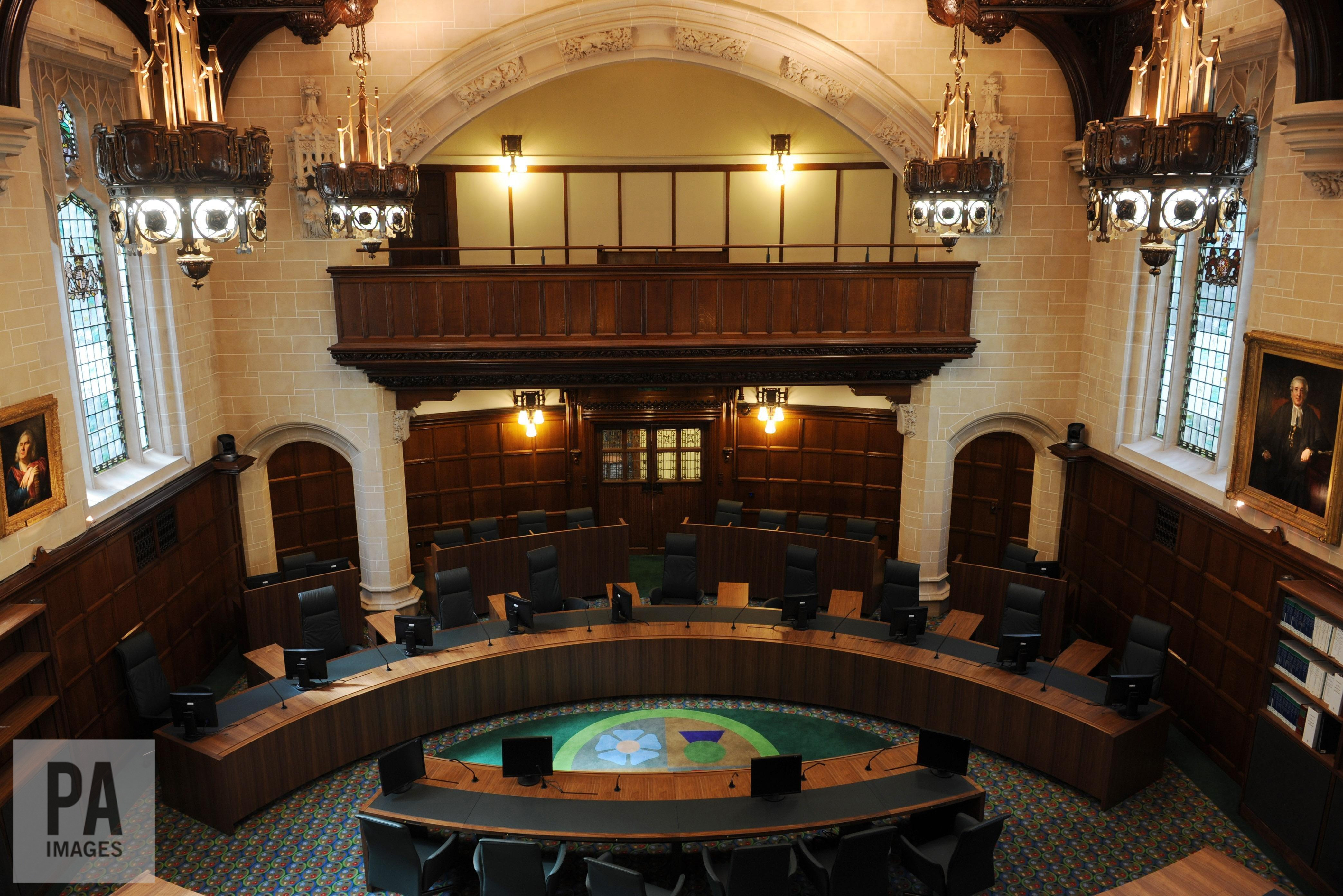
The Supreme Court of the United Kingdom is the highest court in the land and has jurisdiction over all other courts in the country. It is the final court of appeal and its decisions are binding on all other courts in the UK, including the High Court, the Court of Appeal, and the Crown Court. Its primary role is to decide appeals on points of law. It hears appeals from the High Court and the Court of Appeal on all civil and criminal matters, and can also hear appeals from the High Court of Justiciary in Scotland, the Court of Appeal in Northern Ireland and the Judicial Committee of the Privy Council. The Supreme Court also has the power to declare a law to be unconstitutional, and to make binding declarations on the interpretation of EU law.
The United Kingdom Supreme Court is the country’s highest court and its final court of appeal for all civil cases in England, Wales, and Northern Ireland. The government has no power to “strike down” legislation passed by the UK Parliament, which is the elected body’s responsibility. The Supreme Court, on the other hand, has a more limited role in interpreting the law and developing it in order to ensure its proper application. Except in the case of criminal cases in Scotland, which are decided by the High Court of Judiciary in Edinburgh rather than the Supreme Court, all appeals from all three jurisdictions are heard by the Supreme Court. It is concerned with routine civil or criminal cases that have occurred in these jurisdictions. The UK Supreme Court plays a critical role in ensuring that the rule of law is followed in its rulings because it ensures that the law is applied fairly and consistently. This will help to ensure justice and fairness in the United Kingdom, as well as to encourage people to follow the law. In this manner, the UK Supreme Court plays a critical role in the legal system and society as a whole.
Upholding Equal Justice: The Uk’s Supreme Court
The Supreme Court of the United Kingdom is the country’s highest court, and it handles all civil and criminal cases from England, Wales, and Northern Ireland. It has the authority to hear appeals from lower courts and make decisions affecting the entire population as a result of its decisions. The Supreme Court is a body established to foster greater transparency between the courts and Parliament, in order to separate senior judges from the Upper House of Parliament. As the guardians of the Constitution and a guardian of the promise of equal justice under the law, the Court upholds it. Despite the fact that the decision ultimately rests with Parliament and not the judiciary, the Supreme Court has the authority to interpret and apply the law. Individuals will always have access to a fair and impartial judicial system as a result of this.
Supreme Court Justices Uk Salary

The Supreme Court Justices of the United Kingdom are among the highest paid in the legal profession. They receive an annual salary of £255,723, which is significantly higher than the salaries of other judges in the judicial system. This is intended to reflect the importance of the role of the Supreme Court Justices in the UK legal system. They are expected to provide the highest level of legal expertise and to ensure that the law is upheld to the highest standard.
How Does A Case Get To The Supreme Court Uk
In the UK, cases can make their way to the Supreme Court through various routes. In many cases, the court is the court of last resort, meaning that it is the last court that the case can be taken to if the parties are still dissatisfied with the judgment. This can happen if a case was initially brought to the High Court, or the Court of Appeal, and the final judgment was unsatisfactory to one or both parties. In such cases, the party can apply for a further appeal at the Supreme Court, which is the highest court in the UK. The court will decide whether to grant permission for the appeal to go ahead, and if so, the case will be heard by the Supreme Court Judges. It is important to note that the Supreme Court can only hear cases that involve matters of public importance, or cases that have implications for the whole of the UK.
The Supreme Court, without a doubt, has the final say in how many cases it hears. A petition for writ of certiorari, filed by an individual or entity wishing to appeal a lower court ruling, serves as the mechanism for requesting a writ of certiorari. There must be at least four of the nine justices to grant the case acertiorari. In the vast majority of cases, the Supreme Court is reached through an appeal to a decision issued by the U.S. Court of Appeals. Every state has its own supreme court, which can rule on cases involving state laws. The supreme court of each state is usually where a defendant’s case first goes. It could be argued that the Supreme Court has the authority to reject a review of an ultimate decision made by a state supreme court for a variety of reasons.
When a case is decided by the court’s original jurisdiction, the least likely venue for it to be heard is the courtroom. The Supreme Court has direct jurisdiction over original jurisdiction cases, unlike appeals courts. According to law, the Supreme Court’s term begins on the first Monday in October. Between October and December, arguments are held in the first two weeks of each month. The Court usually only hears oral arguments once per week during its two-week sessions, on Mondays, Tuesdays, and Wednesdays.